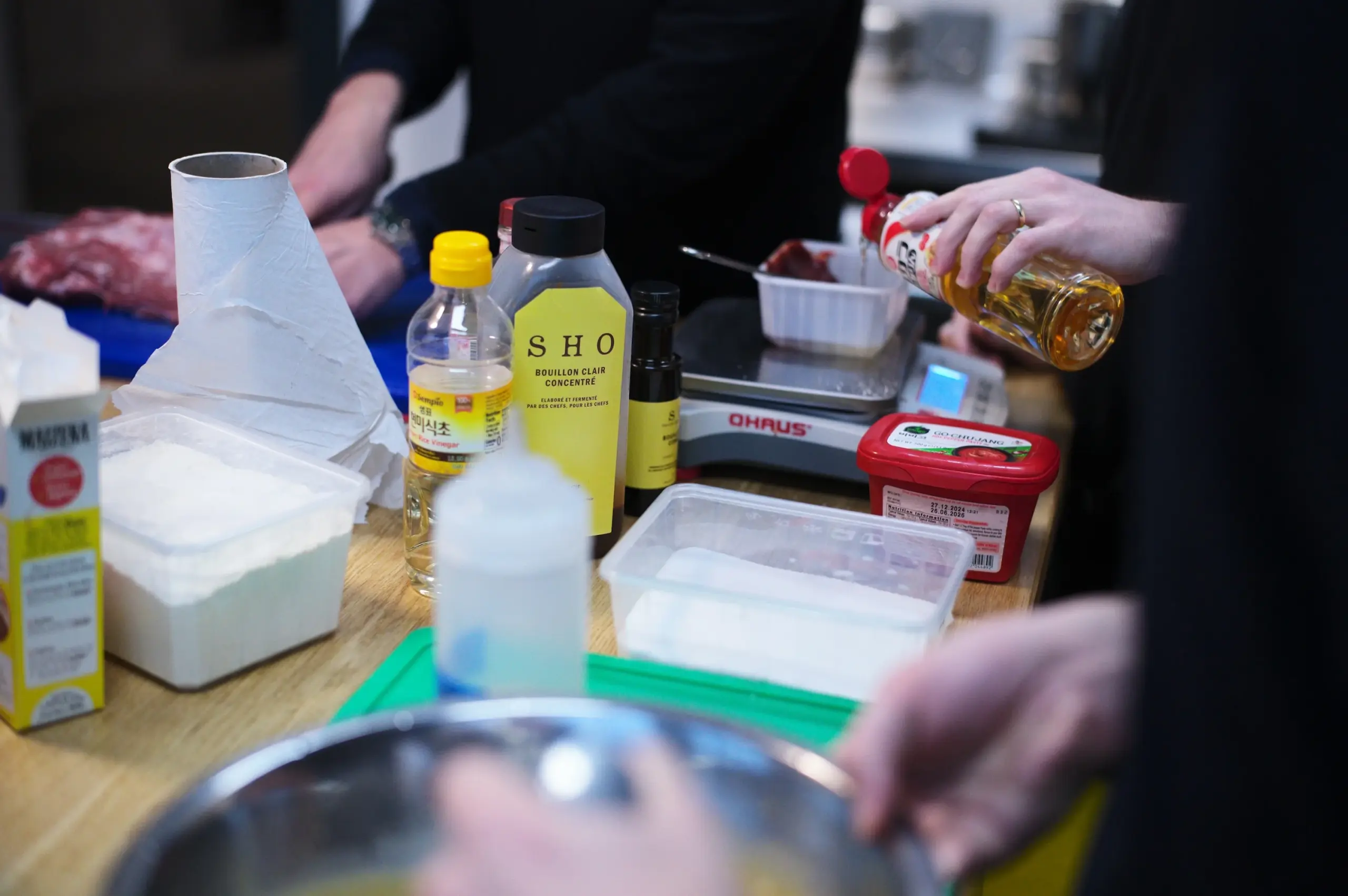
Fermentation and flavor have always belonged together. Long before food science had names for amino acids, organic acids, esters, enzymes, or volatile aroma compounds, cooks knew something simple: when real ingredients are given time, care, and the right conditions, they become deeper, richer, and more memorable.
That is the difference between food that tastes added-on and food that tastes built-in.
A sauce can be seasoned. A broth can be corrected. A snack can be coated. But when flavor comes from fermentation, it does not sit on the surface. It moves through the food. It creates acidity, savoriness, aroma, roundness, and complexity from within.
For food companies, this matters more than ever.
Consumers want food that tastes exciting, but they also want ingredient lists that feel honest. Product developers need impact, but they cannot always rely on artificial shortcuts. Chefs want depth, but industrial production demands consistency. Brands want products that feel culinary, real, and scalable at the same time.
That is where fermentation becomes powerful.
At EATT, food is not only something to formulate. It is something to respect. The brand exists for food companies, developers, cooks, and culinary champions who insist that food must taste delicious and remain real . Fermentation fits that philosophy because it does not fake flavor. It reveals it.
Table of Contents
- Why Fermentation Matters Now
- What Is Fermentation in Food?
- Why Fermentation and Flavor Belong Together
- The Science of Fermented Food Flavor
- Acidity: The Brightness That Wakes Food Up
- Umami: The Savory Depth Behind Memorable Taste
- Aroma: The Invisible Architecture of Flavor
- Texture and Mouthfeel: Flavor You Can Feel
- Why Fermentation Feels More Real Than Flavor Shortcuts
- What EATT Does With Fermentation and Flavor
- We Build Flavor From Real Ingredients
- We Translate Culinary Ideas Into Scalable Food Solutions
- We Use Fermentation With Intention
- Fermentation and Flavor for Modern Food Brands
- Sauces, Stocks, Broths, and Bases
- Plant-Based Foods
- Snacks, Seasonings, and Condiments
- Ready Meals and Culinary Systems
- Fermentation vs. Artificial Flavor Shortcuts
- Common Mistakes in Fermented Flavor Development
- How to Know When Fermentation Is the Right Tool
Why Fermentation Matters Now
Food has a flavor problem.
Many products are technically correct but emotionally flat. They deliver salt, sweetness, heat, fat, or aroma, but they lack the kind of depth that makes people come back. They taste engineered instead of cooked. They perform in a tasting booth but disappear in real life.
The modern food industry has become excellent at speed. But flavor often needs slowness.
Fermentation brings that missing dimension back.
Harvard’s food fermentation program describes fermentation as a way microbes contribute to the production, preservation, and enhancement of foods across culinary traditions. It also highlights how fermentation changes and enhances flavors, aromas, and tastes.
That is why fermentation is appearing in more conversations around food innovation, clean label flavor, plant-based development, sauces, seasonings, condiments, alternative proteins, broths, dairy alternatives, and premium prepared foods.
It answers several challenges at once:
- How do we create more natural flavor development?
- How do we build umami without making food taste artificial?
- How do we reduce flatness in plant-based foods?
- How do we create culinary depth at scale?
- How do we make clean-label products taste truly satisfying?
Fermentation is not a trend because it is new. It matters because it is ancient, useful, and still underused.
Summary:
Fermentation matters because it creates flavor complexity from real ingredients. It can help food brands build depth, acidity, umami, aroma, and clean-label character without relying only on artificial flavor shortcuts.
What Is Fermentation in Food?
Fermentation is a food transformation process driven by microorganisms such as bacteria, yeasts, and fungi. These microorganisms act on food components like sugars, proteins, fibers, and fats, creating new compounds that change taste, aroma, texture, preservation, and nutritional perception.
In simple terms, fermentation is controlled change.
The food fermentation process can produce organic acids, alcohols, carbon dioxide, enzymes, peptides, amino acids, and aroma compounds. These changes are why cabbage becomes sauerkraut, soybeans become miso, milk becomes yogurt or cheese, flour becomes sourdough, grapes become wine, and grains can become beer.
Fermentation is also one of the oldest forms of food intelligence.
Before refrigeration, it helped preserve food. Before industrial flavoring, it helped make food delicious. Before “clean label” became a market phrase, fermentation already gave people a way to transform simple ingredients into complex taste experiences.
Today, fermentation is both traditional and modern.
It can happen in a kitchen, a cellar, a tank, a controlled production facility, or an R&D lab. It can be wild, guided, traditional, culinary, or precision-controlled. FAO describes precision fermentation as the use of microorganisms such as bacteria, yeasts, or fungi to produce specific target products through controlled production systems.
For EATT, the important point is not fermentation for novelty. It is fermentation for flavor.
Why Fermentation and Flavor Belong Together
Fermentation and flavor belong together because fermentation creates taste through transformation.
Most flavor shortcuts work by addition. You add a flavoring. You add a seasoning. You add a masking agent. You add a top note.
Fermentation works differently.
It changes the ingredient itself.
A tomato can become deeper. A grain can become sweeter. A legume can become more savory. A vegetable can become brighter. A base can become more rounded. A sauce can become more alive.
This is why fermented food flavor often feels layered.
It may start with acidity, move into savoriness, open into aroma, and finish with lingering depth. That structure is hard to achieve with one-note flavoring alone.
Fermentation can create:
- Brightness from organic acids
- Depth from amino acids and peptides
- Complexity from volatile aroma compounds
- Roundness from slow enzymatic breakdown
- Balance through interaction between acid, salt, sweetness, fat, and umami
- Identity through microbial and ingredient-specific character
Scientific research on fermented foods describes fermentation as a process that produces both volatile and non-volatile flavor compounds, contributing to the distinct sensory profiles of fermented products.
That is the key: fermentation does not only create taste. It creates a sensory profile.
The Science of Fermented Food Flavor
Flavor is not one thing.
It is a system.
When someone says, “This tastes amazing,” they are responding to a combination of taste, aroma, texture, temperature, memory, expectation, and context. Fermentation influences many of these at once.
Acidity: The Brightness That Wakes Food Up
One of the most recognizable effects of fermentation is acidity.
Lactic acid fermentation, for example, can create a clean, rounded acidity in foods like yogurt, kimchi, sauerkraut, fermented vegetables, and some grain-based fermentations. Acetic fermentation can create sharper vinegar-like notes. Other fermentations can generate softer or more complex acid profiles.
Acidity matters because it gives food energy.
Without acidity, many products taste heavy, dull, or overly sweet. With the right acidity, flavors become more precise. Fat feels less greasy. Salt feels more alive. Vegetables taste brighter. Sauces gain lift.
But acidity must be controlled.
Too little, and the food remains flat. Too much, and the product becomes harsh, sour, or unstable from a sensory point of view.
Common Mistake:
Treating fermented acidity as just “sourness.” Good fermented acidity is not only sour. It can be round, bright, refreshing, appetite-building, and deeply integrated into the food.
Umami: The Savory Depth Behind Memorable Taste
Umami is one of the biggest reasons food developers care about fermentation.
Fermented foods like miso, soy sauce, aged cheese, fish sauce, fermented grains, and koji-based ingredients are known for savory depth. This often comes from the breakdown of proteins into peptides and amino acids, including glutamate-related savory compounds.
The result is not simply “more flavor.” It is more satisfaction.
Umami can make food taste fuller, longer, and more complete. It can help plant-based foods feel less thin. It can support reduced meat systems. It can improve broths, sauces, snacks, fillings, marinades, and ready meals.
This is especially important when a product needs culinary credibility.
A stew tastes better when it feels simmered. A sauce tastes better when it feels developed. A plant-based filling tastes better when it has roasted, savory, fermented, or aged depth.
Fermentation can help build that impression naturally.
Expert Tip:
Use umami fermentation when a product tastes technically acceptable but emotionally incomplete. It is often the missing bridge between “good enough” and “I want another bite.”
Aroma: The Invisible Architecture of Flavor
Most of what people call flavor is actually aroma.
Aroma compounds travel retronasally from the mouth to the nose while we eat. This is why food can taste muted when someone has a blocked nose. Fermentation can produce aroma compounds that make foods smell roasted, fruity, buttery, cheesy, earthy, malty, nutty, floral, funky, tangy, or savory.
That aromatic complexity is one of fermentation’s greatest strengths.
A clean-label sauce may need roasted depth. A snack seasoning may need aged notes. A broth may need slow-cooked character. A plant-based cheese may need dairy-like complexity. Fermentation can help create these cues.
Research continues to examine how microbial communities and fermentation conditions influence flavor development in foods, including volatile compounds that shape aroma.
The lesson for food brands is simple: if you want better flavor, do not only ask what the product tastes like. Ask what it smells like when it is hot, cold, opened, cooked, chewed, and remembered.
Texture and Mouthfeel: Flavor You Can Feel
Fermentation can also influence texture.
It can soften vegetables, thicken dairy systems, change dough structure, reduce harshness in legumes, affect viscosity, and create creamier or more cohesive eating experiences.
Texture matters because mouthfeel changes flavor perception.
A thin sauce can taste weaker than the same flavor in a richer base. A gritty plant-based product can make savory notes feel less premium. A harsh fermented ingredient can make acidity feel aggressive. A smooth, rounded base can make umami feel deeper.
This is why EATT looks at flavor as a full culinary architecture, not only as an ingredient list.
A great fermented flavor system must answer three questions:
- What does it taste like?
- What does it smell like?
- How does it feel in the mouth?
When all three work together, food becomes memorable.
Why Fermentation Feels More Real Than Flavor Shortcuts
People may not always understand fermentation science, but they understand the result.
They know the difference between a sauce that tastes stirred together and a sauce that tastes cooked. They know the difference between a broth that tastes salty and a broth that tastes deep. They know the difference between a snack that tastes sprayed and a snack that tastes seasoned with intention.
Fermentation feels real because it is built through transformation.
It has a before and after.
Soybeans become miso. Milk becomes cheese. Flour becomes sourdough. Vegetables become pickles. Grapes become vinegar or wine. Time leaves evidence.
That evidence matters in a food culture where consumers are paying more attention to transparency, recognizable ingredients, and naturalness. Recent clean-label trend reporting shows continued consumer interest in transparency, recognizable ingredients, and natural components.
However, “natural” alone is not enough.
Natural flavor can still feel generic. Clean label can still taste boring. A short ingredient list can still disappoint.
The real opportunity is not just cleaner food.
It is cleaner food that tastes better.
That is where fermentation becomes strategic. It helps brands build flavor from ingredients and processes consumers can understand: time, microbes, salt, heat, grains, vegetables, legumes, fruits, dairy, proteins, and culinary craft.
Attention:
Fermentation is not automatically better just because it is natural. It must be safe, controlled, sensory-tested, and designed for the product. Bad fermentation creates off-notes. Good fermentation creates direction.
What EATT Does With Fermentation and Flavor
EATT uses fermentation as part of a bigger culinary mission: to help food taste delicious while staying real.
The brand is built for food companies, food developers, cooks, and culinary champions who believe food should not have to choose between performance and truth .
Fermentation helps make that possible.
It gives product teams a way to create natural flavor development, deeper savory structures, better acidity, stronger aroma, and more memorable eating experiences.
But fermentation is not magic by itself.
It needs culinary judgment.
We Build Flavor From Real Ingredients
At EATT, flavor starts with real food.
That means looking at ingredients not only for what they are, but for what they can become.
A vegetable is not just a vegetable. It can be roasted, reduced, fermented, blended, balanced, dried, concentrated, or layered. A legume is not just a protein source. It can become nutty, savory, creamy, or umami-rich. A grain is not just a base. It can become malty, sweet, tangy, or aromatic.
Fermentation opens these possibilities.
Instead of asking, “What flavor can we add?” we ask, “What flavor can this ingredient develop?”
That shift matters.
It changes food development from decoration to construction.
We Translate Culinary Ideas Into Scalable Food Solutions
A chef can make flavor in a pot.
A food company must make flavor consistently, safely, and at scale.
That is the hard part.
Fermentation may be romantic, but industrial food development is practical. A fermented ingredient must work across batches. It must fit processing conditions. It must remain stable. It must survive heat, cold, packaging, shelf life, and distribution. It must taste right in the final product, not just in the lab.
EATT helps connect culinary ambition with product reality.
That includes:
- Defining the target flavor profile
- Choosing the right fermentation direction
- Building acidity, umami, aroma, and texture intentionally
- Avoiding off-notes
- Supporting clean-label goals
- Creating flavor systems that fit real production needs
- Helping brands move from concept to product
The goal is not fermentation for fermentation’s sake.
The goal is food that tastes like someone cared.
We Use Fermentation With Intention
Fermentation can be delicate, bold, subtle, funky, bright, savory, creamy, acidic, earthy, or aromatic.
Not every product needs the same expression.
A premium broth may need slow-cooked umami. A plant-based filling may need roasted and fermented depth. A condiment may need acidity and aromatic lift. A snack may need intense savory impact. A sauce may need roundness and length.
Good fermentation strategy starts with the eating moment.
Who is eating?
What are they expecting?
What emotion should the flavor create?
What cuisine or memory does the product evoke?
What should happen in the first bite, middle bite, and final note?
That is where EATT’s culinary perspective becomes valuable.
We do not ferment to make food strange.
We ferment to make food taste more true.
Fermentation and Flavor for Modern Food Brands
Fermentation and flavor can support many product categories. The best applications are often those where the food needs more depth, more naturalness, more identity, or more culinary credibility.
Sauces, Stocks, Broths, and Bases
Sauces and broths are natural homes for fermentation.
They are supposed to feel developed. They need depth, balance, and length. A flat sauce feels cheap, even if the ingredients are good. A shallow broth tastes salty instead of nourishing.
Fermented ingredients can help create:
- Long-cooked character
- Savory backbone
- Balanced acidity
- Roasted or aged notes
- More satisfying finish
- Better integration of spices and aromatics
This is especially useful in soups, stews, gravies, bouillons, demi-glace alternatives, marinades, cooking sauces, and ready-to-use bases.
A great sauce does not only season food.
It makes the whole dish feel complete.
Plant-Based Foods
Plant-based foods often struggle with flavor gaps.
Some taste beany. Some taste grassy. Some taste overly processed. Some lack fat integration. Some have protein bitterness. Some taste good in the first bite but become tiring by the third.
Fermentation can help.
It can reduce harsh notes, create savory depth, improve aroma, add acidity, and make plant proteins feel more culinary. Fermentation is also relevant to alternative protein development, and FAO has highlighted precision fermentation as part of the broader transformation of food production, while also emphasizing the need for food safety considerations.
For plant-based brands, the question is not only, “How do we replace meat or dairy?”
The better question is, “How do we create something people genuinely want to eat?”
Fermentation can help answer that.
Snacks, Seasonings, and Condiments
Snacks need impact.
But impact does not have to mean louder salt, more sugar, or artificial intensity. Fermented flavor can create a more adult, layered, craveable profile.
Think of:
- Miso caramel
- Fermented chili
- Koji onion
- Aged cheese notes
- Pickled vegetable seasoning
- Fermented garlic
- Soy-based umami
- Vinegar brightness
- Savory mushroom depth
Condiments also benefit from fermentation because they often need contrast. A condiment must cut through fat, lift a dish, and bring a clear identity.
Fermentation gives condiments energy.
It makes them sharper, deeper, and more alive.
Ready Meals and Culinary Systems
Ready meals have one major challenge: they must taste cooked, even when they are produced in a system.
Fermentation can help restore the cues of real cooking.
It can add:
- Background savoriness
- Reduced sauce depth
- Balanced tang
- Slow-developed aroma
- Richness without heaviness
- More authentic culinary identity
This is where fermentation becomes especially valuable for brands that want to move beyond convenience and into quality.
A ready meal should not taste like a compromise.
It should taste like someone knew what they were doing.
Building a sauce, base, plant-based product, snack, condiment, or ready meal that needs more depth? EATT helps food teams create real food flavor through culinary thinking, fermentation, and ingredient intelligence.
Fermentation vs. Artificial Flavor Shortcuts
Fermentation and artificial flavor shortcuts can both influence taste, but they work differently.
| Criteria | Fermentation-Led Flavor | Artificial Flavor Shortcut |
|---|---|---|
| Source of flavor | Developed through ingredient transformation | Added as external flavoring |
| Sensory effect | Layered, integrated, complex | Often direct, immediate, or top-note driven |
| Consumer perception | More connected to real food and tradition | Can feel processed or less transparent |
| Clean-label potential | Often stronger, depending on formulation | Can be harder to communicate cleanly |
| Culinary depth | Can build acidity, umami, aroma, and mouthfeel | Often needs support from other systems |
| Scalability | Requires process control | Usually easier to standardize |
This does not mean every added flavor is bad.
Food development is practical. Sometimes a product needs precise aromatic correction. Sometimes natural flavoring has a role. Sometimes fermentation and flavorings can work together.
But when a brand wants food to feel cooked, real, deep, and memorable, fermentation offers something that shortcuts often cannot: transformation.
Common Mistakes in Fermented Flavor Development
Fermentation can create beautiful flavor.
It can also create problems.
The difference is control.
Mistake 1: Fermenting Without a Flavor Target
Some teams start with the process before defining the desired sensory result.
That is backwards.
A fermentation project should begin with a flavor brief. Is the goal acidity, umami, aroma, masking, mouthfeel, complexity, preservation, or identity? Is the final product supposed to taste Korean-inspired, Mediterranean, French, Nordic, Japanese, Latin American, or completely new?
Without a target, fermentation becomes noise.
Mistake 2: Confusing Funk With Depth
Not every fermented flavor should be funky.
Some products need visible fermentation character. Others need invisible fermentation support. A broth may need depth without tasting fermented. A plant-based sauce may need umami without sourness. A snack may need aged notes without barnyard aromas.
Depth should serve the product.
It should not dominate it.
Mistake 3: Ignoring Food Safety
Fermentation must be safe.
That means controlling microorganisms, pH, salt, time, temperature, water activity, hygiene, and production conditions. FAO’s work on precision fermentation emphasizes food safety considerations as fermentation technologies become more relevant to modern food production.
Culinary creativity does not replace technical discipline.
The best fermented products are both delicious and controlled.
Mistake 4: Forgetting the Final Application
A fermented ingredient may taste amazing on its own and fail in the final product.
Heat can change aroma. Fat can mute acidity. Salt can amplify harshness. Packaging can trap volatile notes. Shelf life can shift balance. Processing can weaken complexity.
That is why fermented flavor development must be tested in context.
A fermented base for a soup is not the same as a seasoning for a chip. A plant-based filling is not the same as a refrigerated sauce. A fermented condiment is not the same as a frozen meal component.
The application decides the solution.
Mistake 5: Treating Clean Label as the Whole Goal
Clean label is important.
But a clean-label product that tastes boring will not win loyalty.
The real goal is clean-label flavor that performs.
A product must be understandable and desirable. It must feel real and taste good. It must satisfy the ingredient-conscious consumer and the hungry human being at the same time.
That is the balance EATT works to create.
How to Know When Fermentation Is the Right Tool
Fermentation is not always the answer.
But it is often the right tool when a product has one of these problems:
- It tastes flat
- It lacks umami
- It feels too processed
- It needs clean-label depth
- It has plant protein off-notes
- It lacks culinary identity
- It needs acidity that feels natural
- It needs a more memorable finish
- It needs to taste cooked, aged, or developed
- It needs a story rooted in real food
The best way to decide is to look at the sensory gap.
Ask:
- What is missing from the flavor?
- Is the missing element depth, brightness, aroma, or mouthfeel?
- Can that element be built through ingredient transformation?
- Will fermentation improve the product in the final application?
- Can the process be controlled, scaled, and repeated?
When the answer is yes, fermentation becomes more than a process.
It becomes a strategy.
Expert Tip:
Use fermentation when the product needs flavor architecture, not just flavor decoration. It is best for brands that want taste to feel developed, integrated, and real.
Conclusion
Fermentation and flavor are connected by one powerful idea: real taste takes transformation.
Fermentation does not simply add flavor to food. It helps food become more flavorful. It creates acidity, umami, aroma, texture, complexity, and memory through time, microbes, ingredients, and control.
For food brands, that creates an important opportunity.
You can make products that taste deeper without making them feel artificial. You can build clean-label flavor without accepting flatness. You can create plant-based foods, sauces, broths, snacks, condiments, and ready meals that feel more culinary and more complete.
At EATT, fermentation is not used as a trend or a trick.
It is used because real food deserves real flavor.
The best taste is not always the loudest. It is the most truthful. And when fermentation and flavor work together, food can taste like what it was always meant to become.
Ready to build food that tastes real, deep, and memorable?